Your Ovaries, Your Fertility
FertilyLife Editorial Team · Surrogacy Education & Patient Guidance
The FertilyLife editorial team publishes guides for intended parents on surrogacy law, costs, process, and clinic coordination in Cancún, Mexico. Content is reviewed with our patient-coordination and legal partners and updated for 2026.
FertilyLife at a glance · Reviewed 2026-09-18
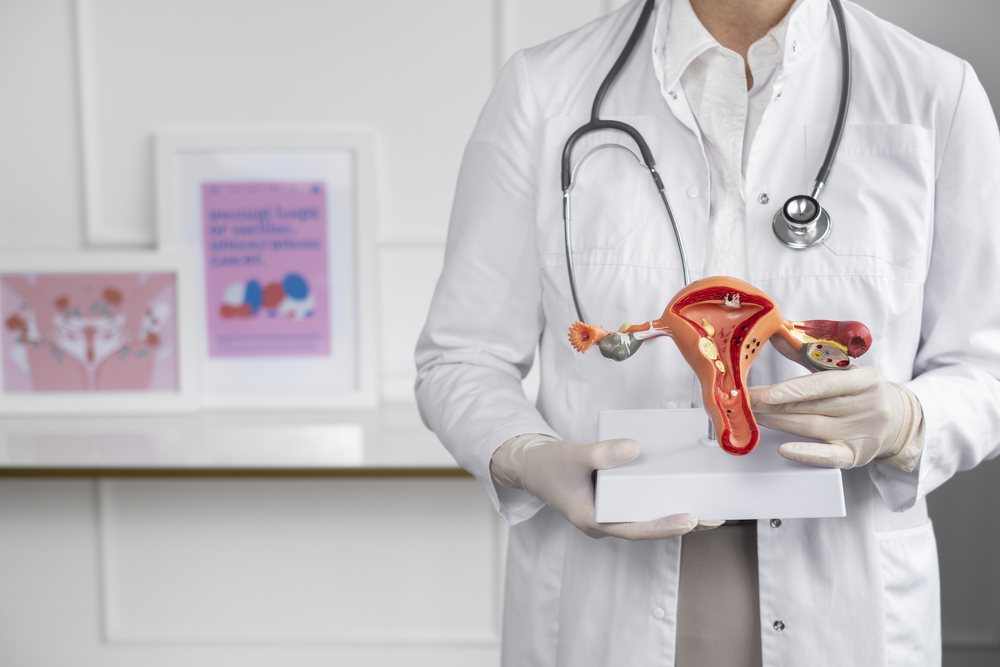
Your Ovaries, Your Fertility
A Plain-Language Guide to PCOS, POI, Luteal Phase Defects and Anovulation
Reading time: approx. 12 minutes
“Something Feels Wrong — and You Don’t Know Why”
It might have started with cycles that were never quite regular — something you chalked up to stress, to travelling, to just being you. Or maybe it hit you out of nowhere: a diagnosis in a doctor’s office that rearranged the future you’d imagined. Or perhaps it’s been months of trying, of hoping, of counting days — and nothing.
If any of this sounds familiar, you are not alone. Ovarian disorders are the most common hormonal cause of female infertility — and yet so many women reach their thirties without ever having heard the words PCOS, POI, anovulation, or luteal phase defect spoken clearly to them.
This article is here to change that. We’ll walk through what’s actually happening in your body, what each condition means for your fertility, and — most importantly — what you can do about it. Because in most cases, there is a great deal you can do.
How Ovulation Is Supposed to Work
Before we talk about what goes wrong, it helps to understand the elegant chain of events that — when everything lines up — leads to ovulation each month. Think of it as a hormone relay race:
• FSH (follicle-stimulating hormone) is released by the pituitary gland, signalling the ovaries to develop follicles, each containing an egg.
• As a follicle matures, it produces oestrogen, which thickens the uterine lining in preparation for a possible pregnancy.
• Once oestrogen peaks, a surge of LH (luteinising hormone) triggers the egg to be released — this is ovulation.
• The empty follicle becomes the corpus luteum, producing progesterone to stabilise the uterine lining for implantation.
When any step in this cascade is disrupted, fertility is affected. The four conditions below represent the most common ways this can happen.
PCOS: The Most Common Culprit
What it is Polycystic ovary syndrome (PCOS) is a hormonal condition affecting roughly 1 in 10 women of reproductive age. It involves elevated androgens (male-type hormones), irregular or absent ovulation, and often insulin resistance. Despite the name, not all women with PCOS have cysts on their ovaries — and not all ovarian cysts mean you have PCOS. For a detailed explanation of the diagnostic criteria, the PCOS Awareness Association is a reliable starting point.
How it affects fertility
Because ovulation is unpredictable or absent, timing conception becomes very difficult. Egg quality can also be affected, and the hormonal environment of the uterus may be less conducive to implantation. That said — and this matters enormously:
✔ Good news: PCOS is the most treatable ovarian cause of infertility. Most women with PCOS respond well to treatment, and many go on to have healthy pregnancies. Women with PCOS also often have a larger egg reserve, which may extend their fertile window.
Treatment pathway
• Lifestyle modifications — Even modest weight loss (5–10%) can restore ovulation in some women. Anti-inflammatory diets, regular movement, and sleep all play a meaningful role.
• Ovulation-induction medications — Letrozole is currently first-line; clomiphene citrate is also used. Both are taken with ultrasound and blood test monitoring.
• Injectables (gonadotrophins) — Used when oral medications haven’t worked; require close monitoring due to the risk of multiple pregnancies. • IUI and IVF — For cases where other approaches have not succeeded. ASRM’s patient resource on PCOS explains these pathways clearly, and the IVF & Fertility Journey on Family By Choice walks you through what to expect at each stage.
The emotional side
PCOS affects not just fertility but your skin, hair, weight, mood, and self-image — all at once, often invisibly. The weight stigma is real and harmful: many women are told simply to ‘lose weight’ without being given proper support. Anxiety and depression are diagnosable co-conditions, not personal failings.
When to see a specialist
If you’ve been trying to conceive for six months or more with irregular cycles, or if first-line treatments haven’t worked after three to six cycles, ask your GP for a referral to a reproductive endocrinologist (REI).
Primary Ovarian Insufficiency (POI): The Diagnosis Nobody Expects
What it is
Primary ovarian insufficiency is when the ovaries lose their normal function before the age of 40. It affects roughly 1 in 100 women under 40, and 1 in 1,000 under 30.
POI is not the same as early menopause. Ovarian function can fluctuate — there may be periods of activity followed by near-dormancy. This is why the word ‘insufficiency’ is preferred over ‘failure’. The Daisy Network (a UK charity for women with POI) has excellent plain-language resources on this.
How it affects fertility
POI significantly reduces the ovarian reserve and ovulation may occur only intermittently or not at all. Oestrogen levels drop, affecting both fertility and long-term health.
⚠ The honest picture: Spontaneous pregnancy is possible but rare — approximately 5–10% of women with POI. There is currently no reliably proven way to restore ovarian function.
The most established route to pregnancy is donor egg IVF — using eggs from a screened donor. Success rates are generally good. SART’s Find a Doctor tool can help you find a reproductive endocrinologist to explore these paths.
The emotional weight
A POI diagnosis often comes as a complete shock. It can feel like a loss of identity, of plans you’d always assumed you had time for. Grief is a normal and healthy response. Psychological support is not optional here — it is part of the medical picture. The Mind & Body Preparations programme on Family By Choice includes specialist-led content on navigating fertility-related grief, alongside Fertility Network UK as an additional support resource.
For your long-term health
Because oestrogen plays a protective role in bone density and cardiovascular health, hormone replacement therapy (HRT) is strongly recommended for women with POI — regardless of fertility goals. Please discuss this with your specialist.
Luteal Phase Defect: The Hidden Fertility Barrier
What it is
After ovulation, the corpus luteum produces progesterone — the hormone that prepares and maintains the uterine lining for implantation. In luteal phase defect (LPD), this output is insufficient. The lining doesn’t develop properly, and implantation may not occur — or may not hold.
How it affects fertility
LPD is often invisible: you may appear to ovulate and have ‘regular’ cycles, yet experience very early losses or repeated implantation failure. This is sometimes called biochemical pregnancy
— a positive test that doesn’t progress. Many women experience this without ever understanding why.
What causes it
LPD is frequently a symptom of an underlying condition:
• PCOS • Thyroid dysfunction (both overactive and underactive) — learn about thyroid function tests here
• Endometriosis
• Hyperprolactinaemia (elevated prolactin)
• Chronic stress, excessive exercise, or significant weight loss
Treatment
• Progesterone supplementation (vaginal pessaries or injections) during the luteal phase
• Treating the underlying condition — thyroid medication, PCOS management, stress reduction
• Ovulation-induction medications to produce a stronger ovulatory event and a healthier corpus luteum
Anovulation: When Ovulation Simply Doesn’t Happen
What it is
Anovulation — the absence of egg release — is the common thread running through many of the conditions above. You may have periods (or something that looks like periods) and still not be ovulating; irregular bleeding can occur without any egg ever being released.
Signs you may not be ovulating
• Cycles consistently shorter than 21 days or longer than 35 days
• Highly irregular cycle lengths from month to month
• Absent periods for three or more consecutive months (outside of pregnancy)
• No mid-cycle rise in basal body temperature (BBT)
• No positive LH surge on ovulation predictor kits (OPKs) Home tracking tools like Kindara and Tempdrop can be useful starting points. However, if your cycles are irregular, blood tests and ultrasound monitoring with a specialist will give you a much clearer picture.
💡 Important framing: Anovulation is a symptom, not a standalone diagnosis. The key question isn’t just ‘am I ovulating?’ — it’s ‘why not?’ That requires proper investigation.
If you’re navigating unexplained cycles or have just received a first diagnosis, consulting a reproductive endocrinologist is the essential next step to understand what’s happening.
What These Disorders Have in Common — And What You Can Do
They are all treatable to some degree. Even POI, the most challenging condition on this list, has clear pathways to parenthood. ‘Treatable’ doesn’t always mean ‘curable’, but it does mean there is a next step.
Early diagnosis matters. The sooner you understand what is happening, the more options you have — particularly with conditions like POI where ovarian reserve may be diminishing.
You need the right specialist. A reproductive endocrinologist (REI) has specific training that a general GP or general OB/GYN may not. You are entitled to a referral, and you are entitled to ask questions. SART’s Find a Doctor tool and the HFEA clinic search (UK) are helpful starting points.
Mental health is part of the treatment plan. Fertility-related grief, anxiety, and depression are real medical concerns, not character weaknesses. Asking for support — from a therapist, a community, a helpline — is not giving up. It is taking care of yourself so you have the resilience to keep going.
You are not your diagnosis. There is enormous shame and self-blame that can accumulate around infertility. You haven’t caused this. These are medical conditions, not moral failures. You deserve care, information, and hope.
A Final Word
Ovarian disorders are common. They are understood. And in most cases, they are manageable — even when the path forward looks different from the one you had planned.
The next step is often the hardest: making the appointment, asking for the bloodwork, saying out loud that something might be wrong. But that step is also the one that opens the door to answers, to options, and to action.
Millions of women with PCOS, POI, luteal phase defects, and anovulation have gone on to become mothers — through treatment, through donor eggs or embryo donation, through paths they never anticipated and came to love. Their stories are worth hearing, and yours is still being written.
Take the Next Step with Family By Choice
Family By Choice is an online education platform built for exactly this moment — when you need more than a search result, but you’re not ready to book a clinic appointment. Courses are
led by reproductive endocrinologists, fertility specialists, lawyers, and counsellors who combine clinical expertise with genuine human understanding.
Whether you’re just starting to understand your diagnosis, weighing up treatment options, or preparing emotionally for the road ahead — explore membership options and see all available courses on Family By Choice →